

From Parklane Landscapes
Shifting Baseline Syndrome (SBS) is what happens when we forget how vibrant the natural world used to be. Each generation grows up with a more depleted environment and calls it “normal,” simply because it’s all they’ve ever known.
Think about walking through a park and thinking, “This seems healthy.” But maybe 30 years ago that same park had twice as many birds, wildflowers, or insects. If you never saw that version, you don’t feel the loss - and that quiet forgetting becomes the new baseline. Over time, we start accepting degraded ecosystems as normal.
Researchers warn that this shift lowers our expectations, increases our tolerance for decline, and reduces our urgency to protect what’s left.
What helps:
Intergenerational conversations that reconnect us with what nature used to be.
Direct experiences with nature that sharpen our awareness of change.
Remembering (knowing) the past is the first step to restoring the future.
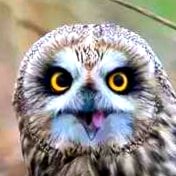
Not a sponsor, I don’t think it’s an AI graphic, and I think it has something important to say. Plus it does have an owl. We can’t save our animals if we don’t save them the spaces they need to thrive.
There have been a couple interactions in my life where I’ve had to remind people that cornfields, livestock pastures, and even former farmland left to go wild for a few years aren’t nature. They are distinctly and irreversibly human-centric areas, with human-dictated ecosystems and populations.
Just because they’re green in color and far from a city doesn’t mean they’re natural. Your relatives who live in a big farmhouse out in the country aren’t necessarily any closer to nature than someone living in an apartment in a city.
Some species (I can reference owls specifically, of course) do benefit from some types of man-made clearings. Field and orchards can provide nice open areas for those that hunt while flying or ones perched high on the periphery and have a great view of rodents going after dropped fruit or grains.
But when we leave nothing for the wildlife, use poisons or other deterrents, or add hazards, then we’re just taking from the environment while giving nothing back. I’ve been happy to be able to highlight new programs for farmers and large landowners where they can get assistance or even get paid for turning corners of their properties back into those which will sustain biodiversity. A few weeks ago someone reached out saying their family had farmland and wanted to know what they could do to help owls and other wildlife. I directed them to their state wildlife commission to see what programs they had and they found a ton of things the state would help with.
Like anything else, there’s good and bad ways to do things. People just need to become aware.
That’s true and all, and I have few good things to say about modern farmland. BUT the question arises, what is nature? Is it a sort of landscape that is devoid of human influence and is that necessarily better and the ideal to strife for? I don’t think so. In my opinion the human vs nature dichotomy, while a very common idea in many societies, is at the root of the problem. Humans are not distinct of nature, they are a part of it and we have to learn how to behave like that and use our landscape shaping abilities to let nature thrive and us humans in it.
For my part of the world at least, scientist say a hypothetical state of nature would be mostly beech forests, which is a pretty cool forest, if you’ve ever been to one, but it isn’t all that diverse. Cutting down large swaths of that forest and converting it into a type of farmland consisting of more diverse and smaller structures - different kinds of timberland, crop fields, meadows, pastures, orchards and vineyards, villages and hedges in between all of these - historically enabled an even more biodiverse environment, than that hypothetical state of nature.
Most of that diversity had only been lost, when agriculture transformed from a labour intensive small scale business into a mechanized and chemically fertilized industry, with much bigger structures and far fewer hedges in between. We can be thankful, that most of us don’t have to toil as farmers like in the agricultural societies of those days and a regional draught or a bad harvest isn’t as life threatening as it used to be. But at the same time, I hope that we will find ways to balance our agricultural production and use of the land in a more sustainable eco-friendly way. I kinda hope, that agricultural robotics may enable us to go back to smaller field sizes or even find completely new forms of agriculture, that a allow for a more structurally diverse landscape again, that is better suited for coexistence with other creatures.